


 If you live anywhere near a beach on the east coast you are probably well aware that piping plovers are endangered, mostly because they happen to like the same sandy beaches we humans like. As you can see in these photos piping plovers are very well camouflaged and many people probably walk right by them on the beach without seeing them.
 Their good camouflage protects them from predators but it also causes problems for them and their little ones. Their nests get stepped on, the little ones get separated from the parents and animals, including dogs, chase them or scare them. Many beach dog walkers insist that their dog would never harm a bird and that may be true. What they don't realize is that the very presence of a dog can scare these birds in a way that may result in nest abandonment and even death. A dog, after all, resembles natural predators such as foxes and coyotes which these birds are programmed to avoid and fear.
 Other things that can threaten these nesting birds on the beach are kites, noise and vehicles. Kites themselves are not dangerous but many birds, including plovers, have an instinctual response to large flying shadows. They don't look to see if it is a kite or hawk or crow. They just respond to the potential of imminent danger and this can cause them so much stress that again, they may abandon their nests.
 They almost look like cotton balls got stuck on them when you see them from the distance.
 Beach plum is a hardy plant that seems to thrive in poor, sandy soil. They grow along the sides of marshes, woodlands, in shore side fields and even along the roadside. After the flowers fade they will set fruit and by August they will have tons of little ripe purple plums that usually end up in one of Cape Cod's favorite trademark jellies. That is if the birds, foxes and other animals don't eat them first.
  If you enlarge this photo you will see hundreds of little plants with a rosette pattern to the leaves which means only one thing....
 Soon all the star flowers will be in bloom!
 Here is one little early bird. Most weren't even in bud yet. These little woodland flowers bloom before the canopy leafs in and this year it is a bit of a race. If you're out this week look for both the Canada mayflower and the star flowers. Many other woodland plants are also in bloom and we'll look at some of them later in the week.
 These painted turtles were all lined up at the edge of another pond....
 And this one is poised to dive in if I make a step closer (which I didn't)
 And this turtle has a new friend....


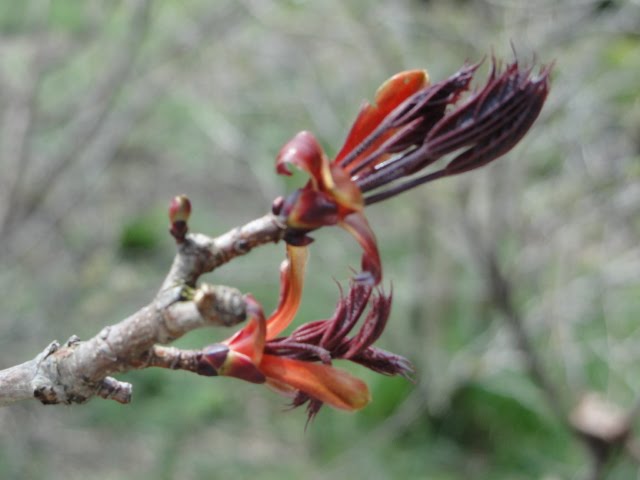


 Good luck! I will post the answers on Saturday.
 See the little white blossoms?
 I'll give you a hint....
 This is called shad bush....and I'll write more about what it signifies tomorrow.
 The little fiddler crab in my hands is still a little cold stunned early in the morning. He was pretty sluggish but it didn't take long for him to get warmed up....
 and get a little feisty, too! Only the male fiddler crabs have the trademark fiddle claw and it is used more for flirting than hurting. It is not unusual to come across a colony of burrows filled with anxious male crabs waving their claws in the air hoping to claim some attention....
 Here you can see a female approaching the burrow of a waiting male. Although the males can be patient and entice a female to come into their burrow they can also be a bit....grabby....if you catch my drift.
 Another male marching sideways across the sand....and then down below you'll see that they will sometimes get a bit argumentative as well. The outside male in this case marched right over to the burrow and grabbed the other crab's claw. The second crab withdrew quickly into its burrow.
 Have you ever seen these little guys? They are all over the Cape. These were photographed in Centerville and in Wellfleet this past week. Where is your favorite spot to find them?

 Check in tomorrow and we'll talk about how to tell the difference....
 Have you seen a turtle yet this spring on the Cape? Watch for them in fresh water ponds or lakes along the shore. They love to rest on small tussocks of dirt and vegetation such as this or on half submerged logs where they can easily slip into the water if danger approaches. Soon you will see turtles of all kinds traveling about looking for mates so keep your eyes open!
 Here's a close up view. You can see they barely peek out of the leaves on the forest floor.
 These blossoms had a nice pink color. They can range in color from pure white to pinkish to these almost pink flowers.
 Mayflowers are in bloom all over Cape Cod right now so if you're out and around, go see if you can find some. The top two photos were from the Hathaway's Pond trails in Hyannis the bottom was from the Skunknett Audubon Sanctuary in Osterville.


 Spring! I hope you can get outside and enjoy it!


